⚕️
Centre for Special Surgery
Loading experience, please wait...
Loading experience, please wait...
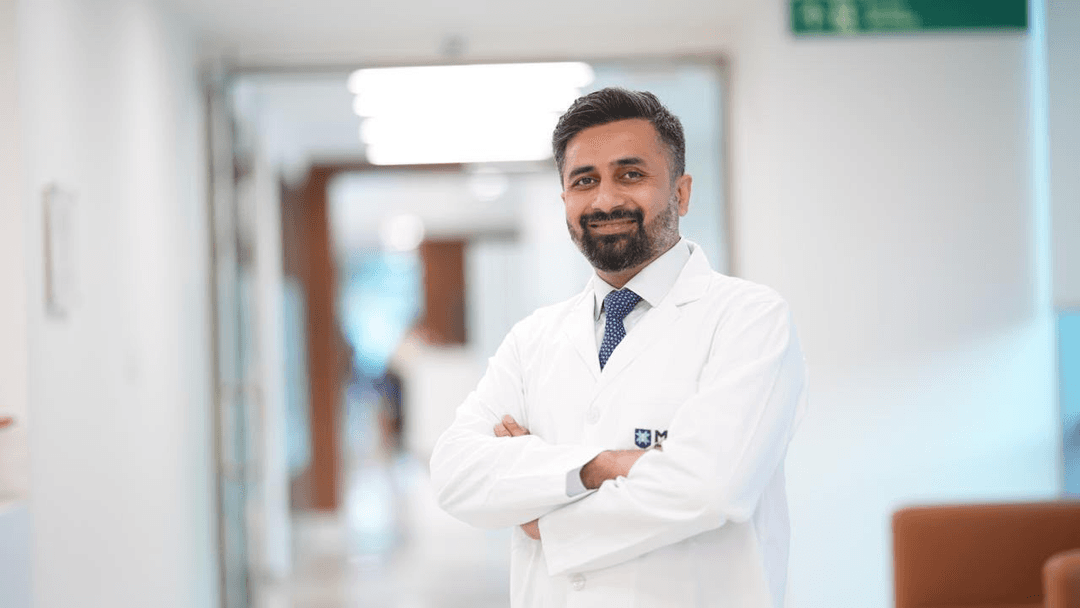
Orthopaedic Hand and Reconstructive Microsurgeon with super-specialty training in hand surgery, peripheral nerve repair, and complex soft-tissue reconstruction.
Dr. Godara evaluates and provides specialized surgical care for:
Completed an advanced fellowship at Lorenz Böhler Hospital in Vienna, Austria, focusing on hand and upper limb surgical care and complex reconstructive procedures.
Focuses on individualized patient evaluation, transparent clinical discussion, and careful surgical technique to restore movement and natural contour.
Learn more about Dr. Godara's backgroundReconstructive microsurgical principles emphasize optical magnification, delicate tissue manipulation, and anatomical tension management to support tissue recovery.
Optical magnification assists in visualizing fine anatomical structures, helping protect delicate digital nerves, small blood vessels, and tissue planes during dissection and repair.
Gentle tissue manipulation helps preserve local blood supply and avoids unnecessary trauma to adjacent healthy skin, supporting smoother post-operative wound healing.
Orienting incisions along relaxed skin tension lines (RSTLs) and performing tension-relieving deep dermal closure helps minimize mechanical strain across the healing scar.
Prioritizes the restoration of anatomical mobility, joint flexibility, and tissue gliding planes so that cosmetic refinement complements physical function.
Each surgical procedure is planned following detailed in-person clinical assessment. Treatment indications and procedure selection are established on an individual patient basis.
Surgical evaluation and optimization of prominent, widened, or irregular scars resulting from past trauma or surgery. Employs established geometric realignment principles (such as W-plasty, broken-line repair, or layered excision) along natural relaxed skin tension lines to help soften scar visibility.
Surgical release of tight, rigid fibrous scar bands that cross joints, flexor creases, or extremities and restrict movement. The procedure involves dividing the constricting fibrous band and performing local tissue transposition (such as single or multiple Z-plasties) or skin grafting to help restore joint mobility.
Surgical removal of benign subcutaneous soft-tissue swellings including lipomas, epidermoid cysts, and ganglion cysts. Meticulous plane dissection aims for complete excision of the capsule and lesion, followed by layered anatomical closure planned along relaxed skin tension lines.
Surgical excision of non-cancerous cutaneous lesions, atypical moles, dermatofibromas, skin tags, and benign skin growths. Performed with careful margin control along natural skin creases and fine suture closure, with tissue submitted for histopathological examination when clinically indicated.
Structural and functional reconstruction of complex hand and wrist anatomy following traumatic injury or disease. Combines bone stabilization, tendon repairs or tendon transfers, digital nerve repair, and local soft-tissue coverage to support grasp, pinch, and functional movement.
Microsurgical repair and reconstruction of the perionychium, sterile matrix, and germinal matrix of the fingernail or toenail. Indicated after crush trauma, lacerations, or digital deformities to re-approximate the nail bed under optical magnification, aiming to support smooth, non-dystrophic nail plate regrowth.
Secondary reconstructive surgery for patients experiencing persistent functional deficits, tissue tethering, unhealed wounds, or joint stiffness following accidents or prior injuries. Aims to release restricting scar tissue and restore tissue gliding planes.
Surgical reconstruction addressing hypertrophic scars, contracture bands, and movement limitations secondary to burn injuries. Restores skin elasticity and joint mobility through contracture release, local tissue advancement, or skin grafting, combined with structured rehabilitation.
Comprehensive scar management, skin lesion excision, and soft-tissue recovery benefit from a close multidisciplinary approach combining surgical reconstruction with specialized clinical dermatology at Skin Decor Clinic.
At Centre for Special Surgery, our reconstructive microsurgical practice collaborates directly with Dr. Monica Chahar Godara to ensure complete clinical care covering both structural anatomy and skin conditioning:
Structured, clinical protocols from your initial evaluation through recovery.
Discussion of medical history, prior procedures, and thorough physical examination of the scar, lesion, or reconstructive need.
Detailed evaluation of tissue elasticity, blood supply, nerve sensation, joint range of motion, and diagnostic imaging if needed.
Discussion of surgical and non-surgical options, technique selection, expected recovery course, and individualized treatment goals.
Performed in an appropriate clinical setting under local, regional, or general anesthesia using delicate surgical techniques.
Scheduled follow-up evaluations, dressing changes, suture removal, scar management guidance, and rehabilitation monitoring.
Evidence-based answers to common questions regarding aesthetic & reconstructive microsurgery.
The medical information provided on this page is strictly for patient educational and informational purposes and does not constitute formal medical advice, clinical diagnosis, or a guarantee of surgical results. Surgical indications, procedures, recovery duration, and aesthetic outcomes vary for each individual patient based on individual anatomy, tissue condition, scar maturity, and post-operative care compliance. No specific surgical outcome, permanent excision, or cosmetic result is guaranteed. A comprehensive in-person consultation with a qualified specialist surgeon is required before undertaking any surgical or reconstructive procedure. Doctor registration details are maintained under official state medical councils in accordance with statutory regulations.